How Gable Steveson got his debut win at UFC 329 | Opinion
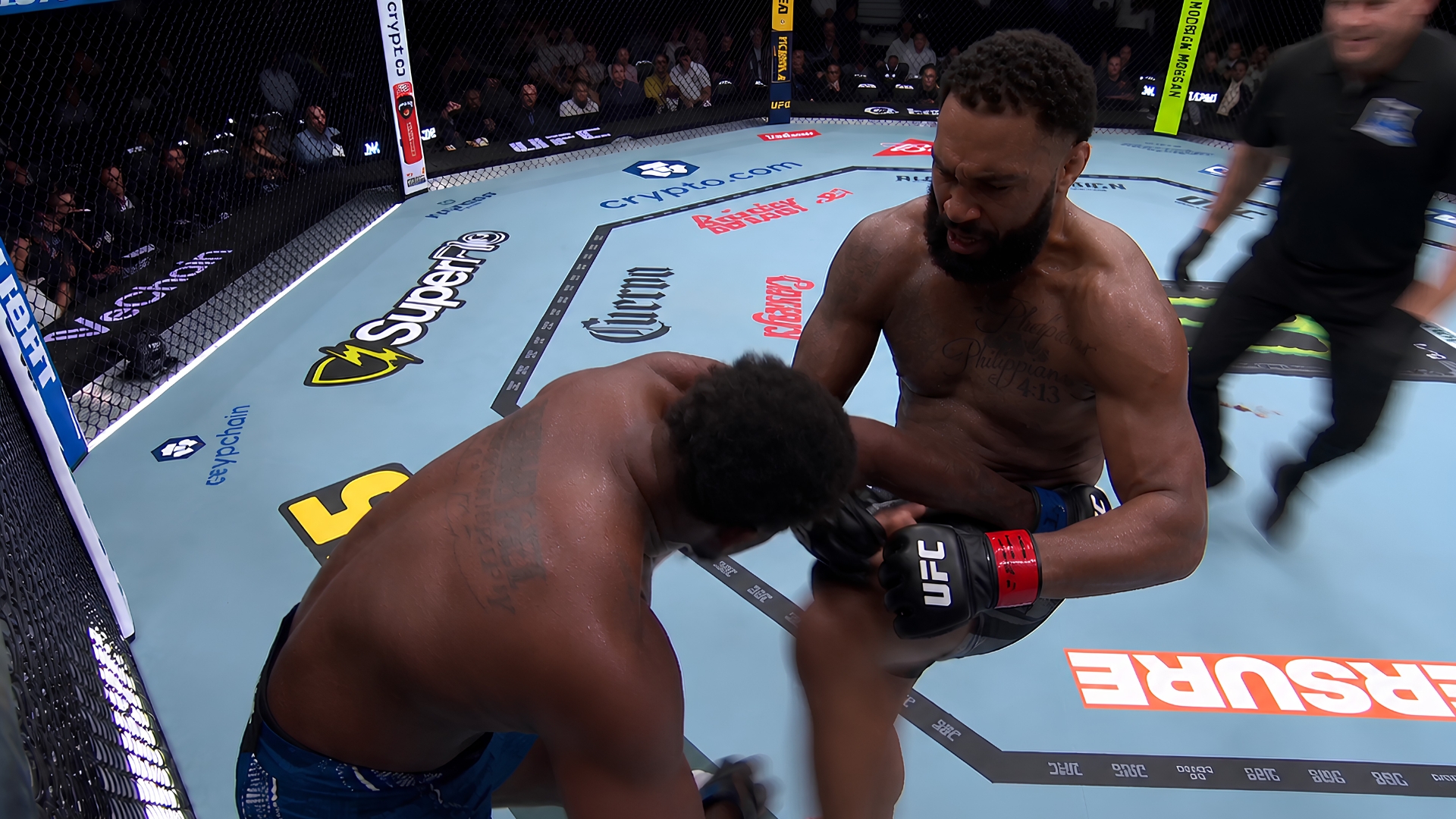
I thought that in his UFC debut, Gable Steveson would use his Olympic-level wrestling to force himself on Elisha Ellison at UFC 329, but it was his work on the feet that helped him get the win.
Steveson managed to find the striking hole in Ellison’s defense and went straight at him with his hands. It was his pace, accuracy and clean distance striking that finished this heavyweight bout by first round KO/TKO at the 2:31 mark, putting a stamp on the debut of what’s hoped to be the next big thing at heavyweight.
The most important number in the fight turned out not to be takedown attempts (Steveson only went for one), it was his 41 significant strikes landed from 57 attempts. That gave him a strong 71% accuracy and a 28-strike advantage over Ellison before the fight was stopped.
| Statistic | Gable Steveson | Elisha Ellison |
|---|---|---|
| Knockdowns | 1 | 0 |
| Significant strikes | 41 of 57 | 13 of 33 |
| Significant-strike accuracy | 71% | 39% |
| Total strikes | 41 of 57 | 14 of 34 |
| Takedowns | 0 of 1 | 0 of 0 |
| Control time | 0:10 | 0:00 |
Steveson forced Ellison to defend at an unsustainable rate
The former WWE prospect turned fighter attempted 57 significant strikes in 151 seconds which works out to approximately 22.6 significant-strike attempts per minute and 16.3 landed per minute. Conversely, Ellison attempted 33 and landed 13, producing rates of 13.1 attempts and 5.2 landed per minute. That means that Steveson landed significant strikes at more than three times Ellison’s output.
That difference shows you just how much Steveson was in control without having to have extended top position (which is what I expected him to try and do). Ellison was not simply being outworked; he was also losing exchanges because Steveson combined much greater volume with a 32% accuracy edge.
| Derived metric | Steveson | Ellison |
|---|---|---|
| Significant strikes landed per minute | 16.3 | 5.2 |
| Significant strikes attempted per minute | 22.6 | 13.1 |
| Average time between landed significant strikes | 3.7 seconds | 11.6 seconds |
| Share of landed significant strikes | 75.9% | 24.1% |
The failed takedown still influenced the striking battle
Steveson officially went 0-for-1 on takedowns and recorded only 10 seconds of control. Even without a completed takedown, he forced Ellison to be wary on different levels (on the feet and shooting for takedown) because of his elite wrestling ability. That sort of hesitation from his opponent gave Steveson cleaner opportunities at distance.
Steveson did not need to grind Ellison against the fence or establish prolonged control as he made the wrestling threat part of the striking equation. He then punished Ellison while standing. When I predicted how this was going to go, I believe he would take Ellison to ground at will even if Ellison didn’t want to (he probably wanted to try to keep the fight on the feet).
How accuracy turned pressure into a finish
Steveson’s performance was completely different than expected as well as being more efficient. Gable landed 41 of 57 significant strikes. He missed only 16 times while Ellison missed 20 of 33 overall.
The defining lesson from UFC 329 is that Steveson was able to impose his wil without becoming dependent on his strongest traditional weapon, his wrestling. His grappling history shaped Ellison’s reaction inside the Octagon, but his distance punching, pace and accuracy is what produced the knockout.
We now await what’s next for Steveson. Ellison wasn’t exactly a top prospect so it will be interesting to see if UFC brings another young talent or starts to work Steveson slowly up the Top 15 rankings.


Jake is the Head of Audience at F4WOnline, having previously worked as a Combat Sports, Gaming and Pro Wrestling writer, successful Editor in Chief and Sports Coordinator for NationalWorld. He has more than ten years of experience covering mixed martial arts, pro wrestling, football and gaming across a number of publications, starting at SEScoops in 2012. His work has also been featured on Wrestling Headlines, Wrestlingnewsco, HotNewHipHop and The Hard Times.
Previously, he worked as the Editor in Chief of 24Wrestling, building the site profile with a view to selling the domain, which was accomplished in 2019. Jake was previously the Editor in Chief for FightFans, a combat sports and pro wrestling site that was launched in January 2021 and broke into millions of pageviews within the first two years. He previously worked for Snack Media and their GiveMeSport site, creating Evergreen and Trending content that would deliver pageviews via Google as the UFC and MMA SEO Lead. Jake managed to take an area of GiveMeSport that had zero traction on Organic and push it to audiences across the globe. Jake also has a record of long-term video and written interview content with the likes of the Professional Fighters League, ONE and Cage Warriors, working directly with the brands to promote bouts, fighters and special events.
He previously also worked for PROGRESS Wrestling, as PR Head and Head of Media across the social channels of the company.