AAA Makes Wrestling Fun Again -or- How I learned To Stop Worrying And Love Lucha Libre | Opinion
Like most things in life, wrestling is cyclical and in a lot of ways, we’re currently at the bottom of the circle.
WWE is in a creative place where the corporate aspect of being part of TKO is the lead story. WWE as a company is the star and it very much feels like characters and performance are secondary. AEW is putting on quality shows, but they are upwards of 7 hours long, which is a lot for even the most hardened of us to take. Ring of Honor, TNA, NXT, these shows all seem to be putting on decent matches, but the stories and characters can come across as listless and repetitive.
So, where does that leave a wrestling fan like myself? It leaves me aching for something new and different and in spite of my previous comments about WWE, they have managed to plop it directly into my eyeballs.
Granted, I’m a little late to the game, but AAA has blown the doors off a whole world of wrestling that was missing from my life. When AAA began to air on Fox in Latin America, I was tasked with doing the weekly live recaps and immediately I fell in love with AAA, the Mexican fans and lucha libre in general. To understand why, we have to go back to the beginning.
The Birth of Lucha Libre
Lucha libre (which translates to “free fight”), has origins that trace back to the early 20th century, exploding in popularity in the 1930s when Salvador Lutteroth established the Empresa Mexicana de Lucha Libre (EMLL, known today as CMLL or Consejo Mundial de Lucha Libre).
During this “Golden Age,” the narrative of the técnico (the noble hero) versus the rudo (the villainous rule-breaker) became a reflection of social struggles and morality, captivating audiences across Mexico and elevating wrestlers to the status of living legends. This is probably best personified by El Santo, the “Silver Masked Man,” who became a folk hero through both his prowess in the ring and his prolific career in cinema.
A luchadore’s longevity is frequently preserved through the sacred tradition of the mask; even as an individual athlete ages or retires, the persona can be passed down through generations, allowing iconic characters like Blue Demon or El Santo to remain eternal figures in the public consciousness.
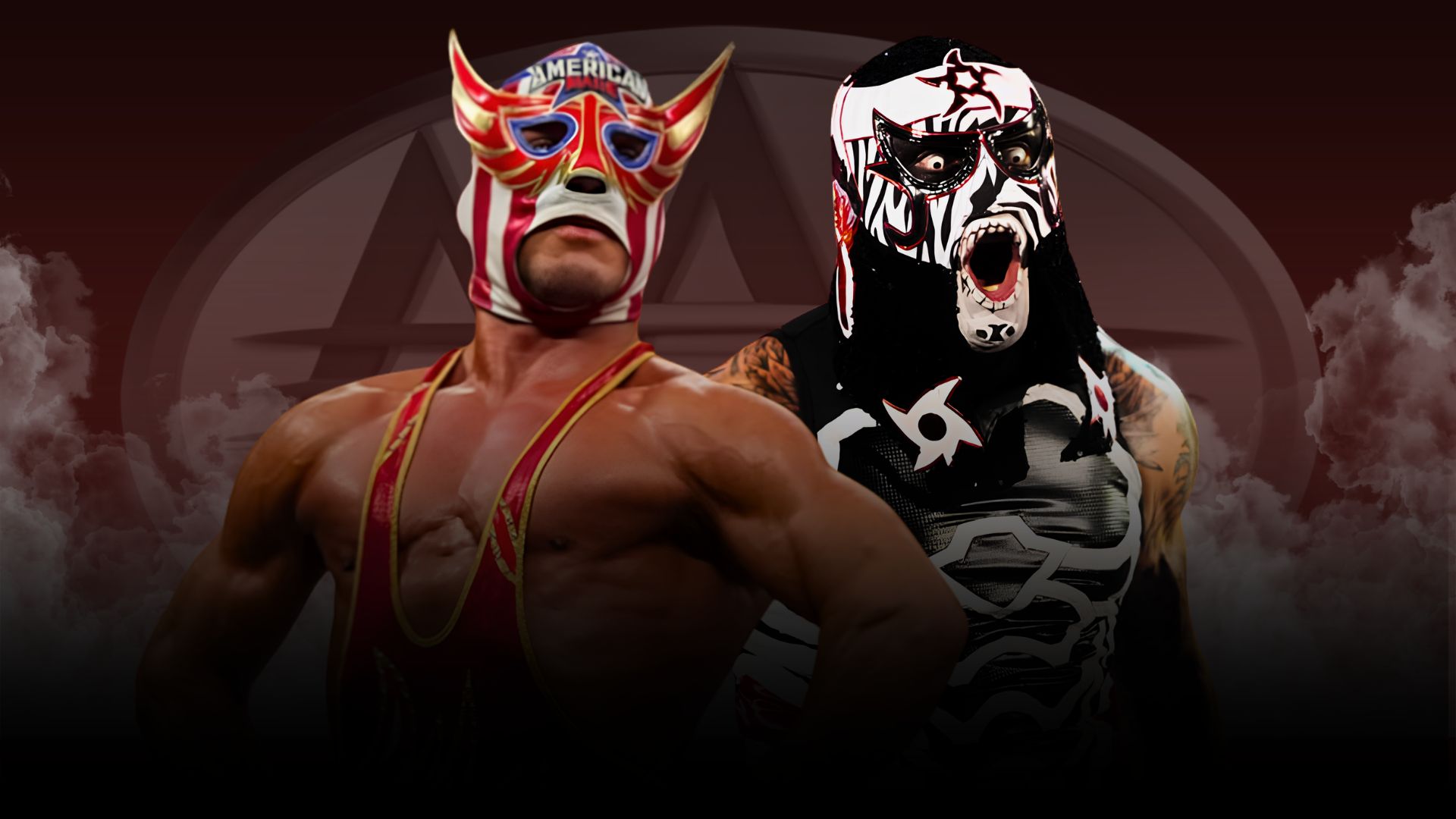
For many luchadores, the mask is sacred, representing an ancestral lineage and a secret identity that is only revealed if lost in a high-stakes Lucha de Apuestas (bet match). One of these such matches is coming up in AAA as “Real” El Grande Americano will face “Original” El Grande Americano in a Mask-vs-Mask match on May 30th.
What Makes AAA So Different?
Today’s lucha libre (AAA in particular) has taken all the legacy, excitement and athleticism and amped it up big time. They have amazing characters, incredible matches and an audience that’s hotter than a ringpost around Kane.
In AAA (and lucha libre in general), the past is not only remembered, but celebrated and factored into the matches and shows happening currently. This makes AAA feel like not just wrestling, but culturally relevant historical moments, which as a viewer, just draws me in more.
The audience is also a big factor. Not since the heyday of the romanticized “Attitude Era” have I seen weekly crowds that are as hot as a Saturday night AAA crowd. They not only live and die with the performers in the ring, but the reactions and noise they produce makes every episode of AAA feel full of tension and excitement that adds to the incredible work going on in the ring.
Outcomes feel like wins and losses instead of booking decisions. Interference and run-ins happen naturally and make sense within the story of the match. These may not seem like crazy innovations, but in today’s wrestling world of 15-minute entrances, 45-year olds beating each other up and endless screwy “swerves,” the simple act of telling a story is a novelty.
What You Need To Know
In addition to the aforementioned El Grande Americano Civil War, AAA is running programs in which El Hijo del Vikingo is desperately searching for success with Omos backing him up, Flammer, the Reina de Reinas Champion (Women’s Champion), is about to battle the newly-signed Catalina, who’s looking to end Flammer’s almost 1000-day title reign and there is major Clown drama, as Pagano and Psycho Clown (holders of the AAA Tag Titles) are about to be at each other’s throats.
On commentary, Corey Graves and JBL (who has a surprisingly deep level of lucha-knowledge) are joined by Rey Mysterio Jr, who translates any Spanish that needs translating. They work as a great team and I was not a big JBL commentary fan in WWE, so that’s saying something.
I’m not pretending to have discovered Lucha Libre or present it as something new, but, for the first time in a long time, I spend my weeks thinking about wrestling not in the context of business deals, ratings or news, but thinking of it in terms of fun. Just like I did when WWE and WCW were at their hottest. If for nothing else, I thank AAA for that. If a jaded old wrestling fan like me can rediscover the joy in wrestling through their program, then telling everyone else to watch it is the least I can do.


Jeff Moss is a writer, creator and developer in animation, comics and pretty much anything else he can get his mitts on. Pro Wrestling has always been his passion for reasons even he doesn't understand.