Dark Side of the Ring episode review: ‘The Big Boss Man’
Dark Side of the Ring is known for telling the often tragic stories of some of wrestling’s biggest names, often gut-wrenchingly sad and usually leading up to the subject’s death or darkest moments.
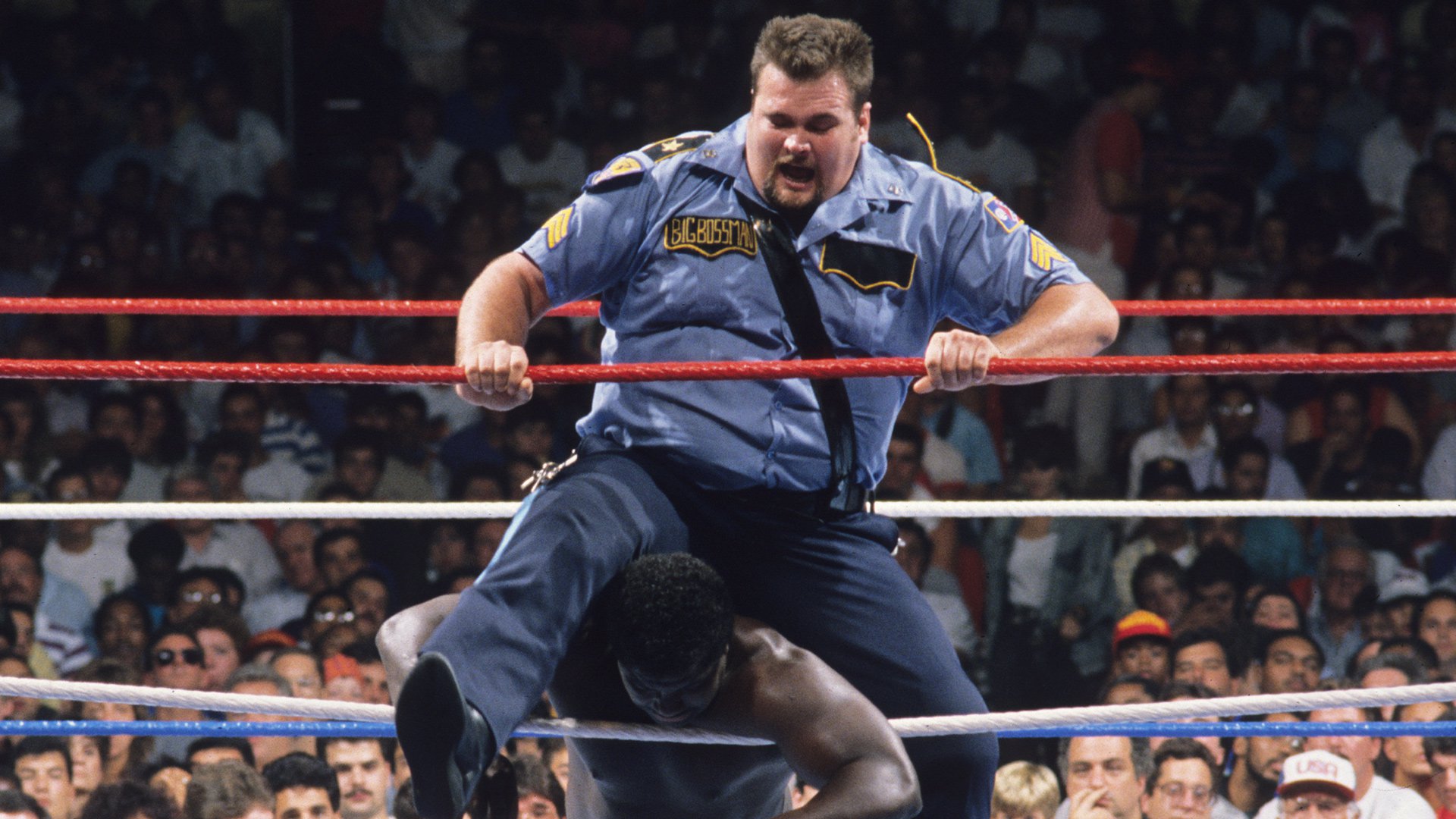
Episode five of season seven tells the story of Ray Traylor, best known as The Big Boss Man in WWF/E through the late ’80’s and ’90’s. While Traylor’s early death from a heart attack is the ultimate result, this episode shows a different side and path for one of wrestling’s great big men.
The Players
- Angela Traylor: Ray’s widow, who speaks about his personal life, family dedication, and health battles.
- Lacy Traylor: Ray’s daughter, who shares personal memories of growing up with him and the tragic events surrounding his passing.
- Jim Cornette Legendary manager and promoter who managed Traylor during his early breakout run as Big Bubba Rogers in Mid-Atlantic / NWA.
- Al Snow: Former WWF wrestler who famously feuded with Traylor during the Attitude Era.
- Terri Runnels: Former WWF manager and backstage personality who worked alongside Traylor during his late-90s WWF return.
- Gerald Briscoe: Former WWE executive, wrestler and friend of Traylor.
The Big Boss Man
Before stepping into the squared circle, Traylor worked as an actual prison guard in Cobb County, Georgia. He was never formally trained in wrestling, but his massive frame and natural athletic agility quickly caught the attention of Dusty Rhodes, who helped transform him into the intimidating Big Bubba Rogers. After gaining immediate momentum in Jim Crockett Promotions as Jim Cornette’s towering bodyguard, Traylor proved he was a legitimate tough guy who could handle himself in the ring.
In 1988, he made his debut in the WWF under the ring name The Big Boss Man. He portrayed a corrupt corrections officer who routinely handcuffed and beat his defeated opponents with a wooden nightstick. The character instantly resonated with fans, establishing him as one of the most hated and effective villains of the late 1980s wrestling boom.
His brutal steel cage match against Hulk Hogan on Saturday Night’s Main Event remains a high-water mark for big man wrestling psychology and execution. Traylor seemed happy in WWF/E and was making good money to support his family.
The Monster Turns
The trajectory of the character changed dramatically when he refused a bribe from the “Million Dollar Man” Ted DiBiase to hand over his nightstick. By standing up for his personal integrity, he executed a wildly successful babyface turn. Audiences embraced him wholeheartedly as a blue collar lawman fighting for justice against corrupt wrestling heels.
Behind the menacing lawman gimmick lay a gentle family man who prioritized his wife, Angela, and daughter, Lacy, above all else. The episode showcases home video footage illustrating how profoundly he cherished his family, being a proud “girl dad” before girl dads were a thing. Despite his tough outer persona, friends and loved ones remembered him as a generous, humorous sweetheart who brought joy to everyone around him.
The Jump To WCW
Traylor made his way to WCW in 1993, but struggled a bit after leaving his WWF persona behind. In WCW, he wrestled under various names including The Boss, The Guardian Angel, and his real name. Despite the struggles, Traylor liked the WCW schedule because he could spend more time with his family and not work as many dates.
He staged a massive career resurrection in 1998 by returning to WWF during the peak of the Attitude Era. Briscoe said that WWF/E was the one who reached out to Traylor about a return, needing his presence on their show. Reimagined in tactical SWAT gear, he became the ruthless corporate enforcer for Vince McMahon’s dominant Corporation faction. This dark reinvention re-established him as a top tier heel willing to do whatever was necessary to protect management’s interests.
During this stretch, the return to unrelenting grind of continuous travel and the newer “hardcore” style of wrestling, featuring heavy physical bumps, began taking an enormous toll on his body. To manage constant joint pain and maintain his demanding position on the roster, Traylor increasingly turned to prescription painkillers and muscle relaxers.
Things Get Weird
Traylor’s second WWF run featured some of the most bizarre and controversial angles in professional wrestling history. He infamously fed Al Snow his own dog Pepper (leading to the brutally bad Kennel From Hell match with Al Snow), disrupted the funeral of Big Show’s father by towing away the casket, and was ‘symbolically’ hung from a Hell in a Cell cage by The Undertaker at WrestleMania XV in front of his family. While these storylines pushed boundaries, Traylor fully committed to every angle with total professionalism.
Cornette in particular lamented that someone as talented as Traylor was now largely remembered for some of the most “ridiculous” moments and stories in wrestling.
Underneath the outrageous television storylines, Traylor’s physical health was rapidly deteriorating due to years of severe body trauma and escalating pill dependency. Tragic fate struck on September 22, 2004, when he died suddenly of a heart attack at his home at just 41 years old.
Former colleagues and family members celebrated how he balanced the extreme demands of the wrestling industry while remaining an exceptional father and husband. Traylor was inducted into the WWE Hall of Fame in 2016 by his wife (who he’d been with since junior prom) and his daughters. Though his life was cut tragically short by the physical toll of his trade, Ray Traylor’s legacy as a brilliant worker and beloved human being endures.
Final Thoughts
I can usually judge an episode of Dark Side of The Ring by its body count. Often, these episodes tend to be a lot of very sad things up until the subject dies, usually in a horrible way. The Big Boss Man episode was a little different.
It painted Ray Traylor as a loving family man who was doing whatever he could to feed his family and that unfortunately led to him using painkillers and drugs to be able to keep doing just that. His untimely death was at home with his family who to this day see him as a wonderful father and husband. In a way, that made his passing that much more tragic.
Like John Tenta last season, Traylor’s story is one that humanizes the larger than life wrestlers we idolize, especially from that era where we didn’t know their every move and backstage moment because there was no access to it. This kind of Dark Side episode makes me wonder how talents like Traylor would have fared in today’s wrestling landscape and it makes me glad that things are much more regulated and watched these days.
The Big Boss Man was a favorite of mine growing up as he featured heavily in the Saturday morning wrestling that I cut my teeth on. This episode of Dark Side of The Ring, though it followed the show’s tragic formula, left me with even more love for the man who by most accounts just wanted to be a loving dad and support his family. That’s not a bad legacy to leave.


Jeff Moss is a writer, creator and developer in animation, comics and pretty much anything else he can get his mitts on. Pro Wrestling has always been his passion for reasons even he doesn't understand.