Dave Meltzer in 2018: Ted Turner ‘changed the face and history’ of wrestling
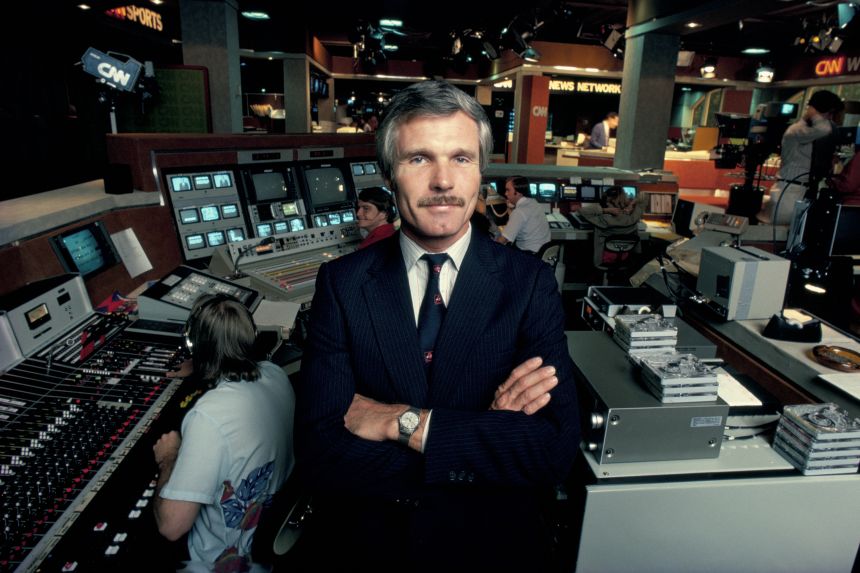
If it hadn’t been for Ted Turner, wrestling today would look very different.
Turner’s passing at 87 years old was announced on Wednesday.
In 2018, Turner revealed during an interview with CBS that he was living with Lewy body dementia, a condition similar to Alzheimer’s. This prompted our own Dave Meltzer to write about Turner’s impact on the wrestling industry in the October 8, 2018 edition of the Wrestling Observer Newsletter, available in our archives for subscribers.
Dave Meltzer on Ted Turner’s impact on pro wrestling history
Meltzer wrote:
“Turner is obviously a key figure in the shaping of pro wrestling history, and easily the second or third most important player in the U.S. over the past 50 years.
While from a hands-on perspective he did little, but from a big picture perspective, his decisions changed the face and history of the industry more than all but one person, Vince McMahon, in the U.S. in the last 50 years.”
In the article, Meltzer traced Turner’s wrestling influence back to 1972, when his Atlanta station WTCG picked up Georgia Championship Wrestling, through the infamous “Black Saturday” in 1984 and his purchase of Jim Crockett Promotions in 1988.
Dave Meltzer on Ted Turner keeping WCW alive
One of Turner’s greatest contributions to wrestling was his refusal to listen to executives in his company who were concerned with the financial losses the former JCP was incurring. Turner said that wrestling helped build his network, that the industry was cyclical, and that he didn’t want people bringing up the idea of closing WCW down again.
Meltzer wrote:
“There were times between 1989 and 1994 when the Turner executives would note the wrestling losses and want to close down the company. At one such meeting, where basically everyone of the key execs underneath were I agreement to shut down the wrestling company due to losses, Turner, at a meeting pointed out that wrestling has been a key part of TBS, had built the station, that it was a cyclical business and to never bring up closing down the company again.“
After the Time Warner and AOL mergers, however, Turner lacked the ability to save WCW.
Meltzer continued:
“As the years went on, with a Time Warner merger and an AOL merger, Turner lost power and, that, combined with the $62 million in losses in 2000 and nosediving popularity, he could no longer save the company that had gone off the rails.”
The full edition of the October 8, 2018 Wrestling Observer Newsletter is available in our archives for subscribers.


Ian Carey is the editing manager at F4WOnline and a writer from Toronto, Ontario, Canada. His work has appeared in award-winning publications including NOW Magazine and The Huffington Post. He joined the F4WOnline team in 2019 and moved into the editing manager role in the summer of 2026. Born in Calgary, Alberta, Ian has covered professional wrestling for more than 15 years.