The folly of heel John Cena and today’s WWE | Column
The opinions expressed in this column are those of the author and do not necessarily reflect those of F4W/WON.
March 1st, 2025. Toronto, Ontario. WWE Elimination Chamber.
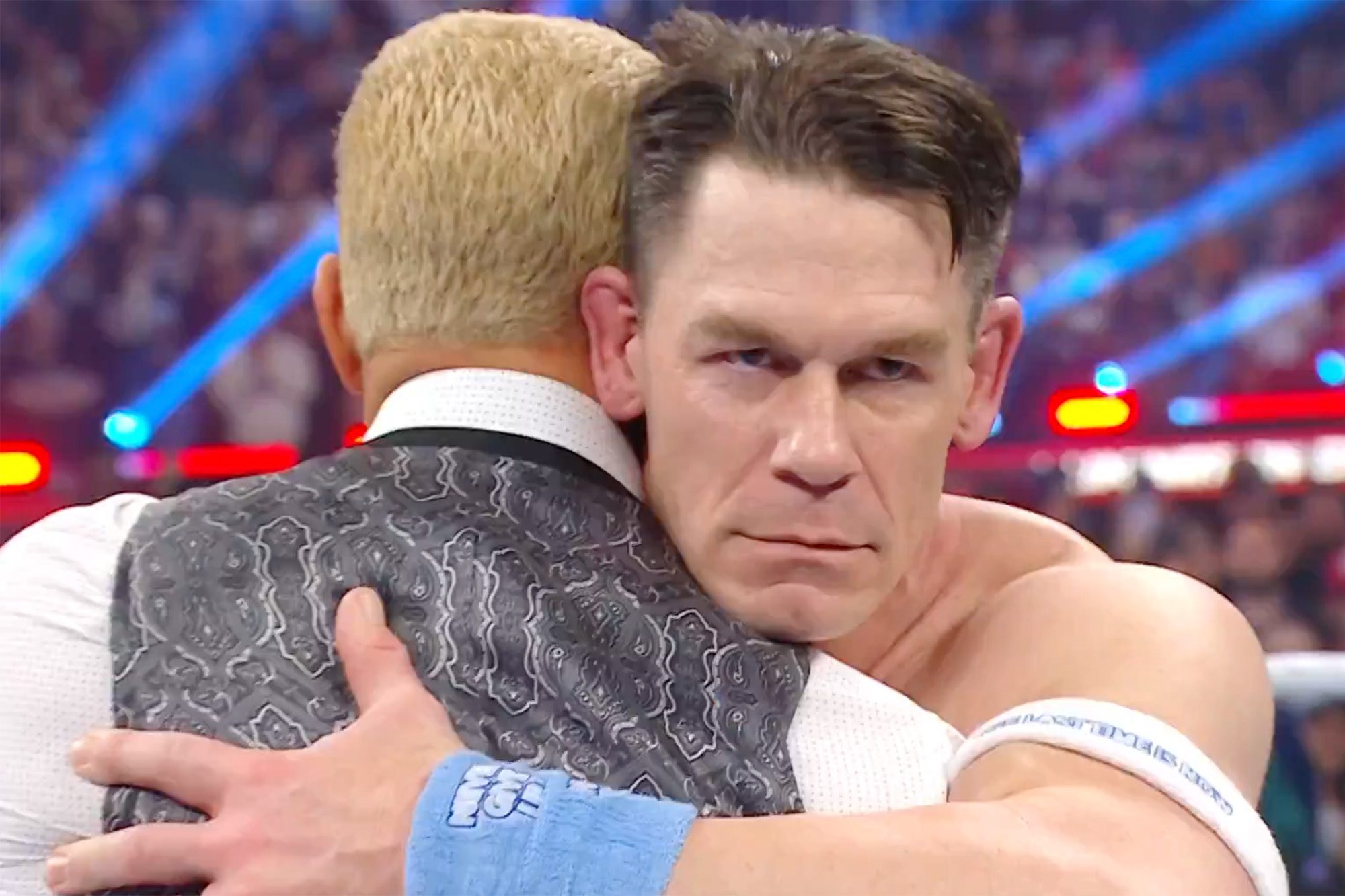
After a hard-fought main event contested in the show’s titular structure, John Cena earned a shot at the undisputed WWE Championship. This was then followed by the show’s final moments which saw Cena do the unthinkable and turn heel for the first time since 2003 when he, with the help of The Rock and Travis Scott, laid a brutal beating on then and now current champion Cody Rhodes.
What had been teased ever so subtly at the Royal Rumble in Indianapolis when Cena called his shot in the Chamber after coming up short in the Rumble match itself had now come to fruition while a confusing saga of The Rock wanting Rhodes’ “soul” after seemingly nuking his “Final Boss” persona to start 2025 was playing out in the background.
While the moment itself was a huge shocker for many, what followed Cena’s turn was something considered by a lot of fans to be a huge disappointment. So much so, that Cena simply turned back to face by the time SummerSlam rolled around, where he’s spent the latter half of his limited appearances in the run-up to his final match ever tonight in Washington, DC.
So, what exactly went wrong with the turn?
The Time Wasn’t Now
One could argue that the novelty of a bad guy run for one of WWE’s longest-tenured faces in 2025 simply was just not a good time for it. In the final year as an in-ring competitor when fans were eager to give the man who once was called “The Face that Runs The Place” his flowers, being asked to boo for him as a villain probably was just not sustainable.
Granted, the turn did start off strong with a couple of promos in Brussels and Glasgow where a then-heel Cena took aim at those who supported him throughout the years and citing an “abusive relationship” as the reason why he turned. But, as WrestleMania 41 got closer, the wheels started to fall apart.
By the time we got to Las Vegas, fans really weren’t buying what WWE was selling with heel Cena — a situation that got to the point where fans were rooting for him at Allegiant Stadium to win his record-breaking 17th World title and booing the guy meant to be WWE’s top good guy in Rhodes.
What happened that April 20 night wound up being arguably the low point of the heel Cena experiment as he and Rhodes battled it out in an plodding main event capped off by Cena defeating Rhodes thanks to Travis Scott ambling about to help Cena win No. 17 before disappearing due to an apparent falling out between Scott and WWE.
Even Cena reciting the same heel promos repeatedly and pairing him with Logan Paul for a tag match at Money in the Bank wasn’t working, which seemed to give WWE the hint to pretty much forget that these last few months of heel Cena ever happened once it came time for a Rhodes vs. Cena rematch for the title at SummerSlam.
Perhaps the key reason why a heel Cena failed to really make any sort of impact was that it was many years too late. Maybe the time to turn Cena was when he was still an active wrestler and not making limited appearances for a single calendar year. Maybe that time was about 13 years ago when “Once in a Lifetime” wasn’t thrown around as a punchline to make fun of a Cena vs. Rock match.
Yes, setting the path to an earlier Cena heel turn in the wake of his loss to The Rock at WrestleMania may have been a better option to follow through on. It would have been preferable than to waste the turn during the twilight of Cena’s career when fans were more likely to cheer the man one last time.
An Inability to Adapt
Much has been made of The Rock’s sudden disappearance after showing up at Elimination Chamber and the weeks leading up to it with the whole “sell your soul” angle that he and Rhodes were involved in. While it’s easy to blame The Rock for being a non-entity in Cena’s heel run – ironically after claiming he was one for the long game when talking about the Elimination Chamber ending in a post-show scrum –, the fault should lie with WWE’s creative for not adapting to this situation as best as they could.
The man in charge of creative in Paul “Triple H” Levesque — someone who’s certainly not shy of putting himself out there as the corporate face of WWE — can’t hide from the fact that he simply dropped the ball when it comes to the aftermath of Elimination Chamber. As stated earlier, the first two weeks of Cena’s heel run were entertaining enough, but once he started off one of his limited dates talking about wanting to “ruin wrestling” for the umpteenth time, it became clear that the one trick pony approach to cover for Dwayne Johnson’s disappearance was simply not going to work whatsoever.
For as much as Levesque touts himself as the man behind WWE’s resurgence in the run-up to WrestleMania 40 and the immediate aftermath, his stubbornness in refusing to change course whenever the planned story to tell hits certain snags have ended up become a significant booking crutch that’s manifested now more than ever with the shine off of Levesque’s creative approach now gone a year removed from WM40.
Finding a way to adjust for an unexpected change in story like The Rock excusing himself from the story he put himself in could’ve been as simple as finding a wrestler on the WWE roster and have them acting as a consort for The Rock and aiding Cena on orders of “The Final Boss”.These types of things are not hard to figure out.
“And Then What?” Syndrome
This here is probably part of a greater problem that I feel has taken over WWE booking for a lot of the post-WrestleMania 40 period. For whatever reason, Levesque and his braintrust have put a lot of emphasis on creating these viral moments meant to drive up social media views or what-have-you and not much else.
From the New Day’s heel turn against Big E last year to what happened with Cena at Elimination Chamber to Ron “R-Truth” Killings’ return after being supposedly released, they all fall under the same playbook: create a “shock” moment, post it all over social media and watch folks talk about it, and then… nothing.
It’s something that I have come to refer to as “And Then What?” syndrome, especially as I’ve watched through some of these moments in my capacity as a weekly recapper for WWE SmackDown on this site, a show that’s been spearheaded creatively (or non-creatively, depending on how you look at it) by Brian “Road Dogg” James, one of Levesque’s consorts dating back to their days with DX.
Part of the nostalgic appeal with the Attitude Era amongst fans (aside from the more racier aspects that are honestly best left in the past) was the feeling of “can’t miss TV” every Monday night. The moments that modern day WWE is so very much addicted to were there, but things had a logical flow to them and made you want to come back for more to see what the next part of the story was.
Point is: storytelling and creating moments are two things that ideally go hand-in-hand. One simply cannot coexist without the other and it’s a lesson that’s fallen on deaf ears in today’s WWE.
While the aforementioned New Day heel turn can be seen as “Patient Zero” for this sort of moments obsessed mentality, it became especially egregious with the aftermath of Cena’s turn to the dark side. In an interview on Chris Van Vliet’s Insight podcast this week, Cena admitted just as much when recanting the reasoning behind the turn:
“What I like is people talking and the cool thing is people who are critical of it had some idea in their head of what they wanted, which is great because that means you’re attached, that means you care… When we did it as a big moment, but with a purpose.”
Cena’s words make it clear that there is a sense of concession when it comes to getting fans to tune in weekly. It’s no longer about hooking viewers long term to see what happens next. It’s now about creating WrestleMania-level moments whenever they can, whether said moments feel earned or feel forced.
That sort of mentality has made it quite clear that the WWE of today is nothing more but a hyper-charged moment-creating factory mired in corporate logos covering the ring and showcasing celebrities attending their events, which has gotten worse since WWE became fully integrated into the monolithic TKO empire alongside UFC.
Time’s Up
We could spend a day discussing at length the many particulars on why and how Cena’s ill-fated heel run came to an abrupt end, but I wanted to focus on the three reasons I listed in this piece, especially because of how they represent something far deeper nagging at WWE as a whole for the entirety of this year – aside from the company’s unforced PR fumbles like bringing back Brock Lesnar even after he was mentioned in Janel Grant’s lawsuit against WWE and deposed alleged sex pest Vince McMahon.
They are the all-too telling signs of a greater issue plagung the self-professed worldwide leader in sports entertainment, even as they make money hand over fist with extravagant broadcast deals and lucrative sponsorships all around the world and its greatest homegrown star of the modern era is about to take his final bow on Saturday.
After Saturday, Cena will get to ride off into the sunset, win or lose against Gunther, but the WWE that he’ll leave behind is in a state of a rut of its own making. It’s funny that for all the talk of a then-heel Cena claiming he was out to “ruin wrestling” in his promos way back in April, it seems as though Paul Levesque’s WWE has accomplished that on its own in short order.


WWE SmackDown recapper. Former NXT PLE/WWE Saturday Night's Main Event/fill-in recapper.