Kevin Nash wishes WWE talent got bigger revenue share, sees unionization issue from ‘both sides’
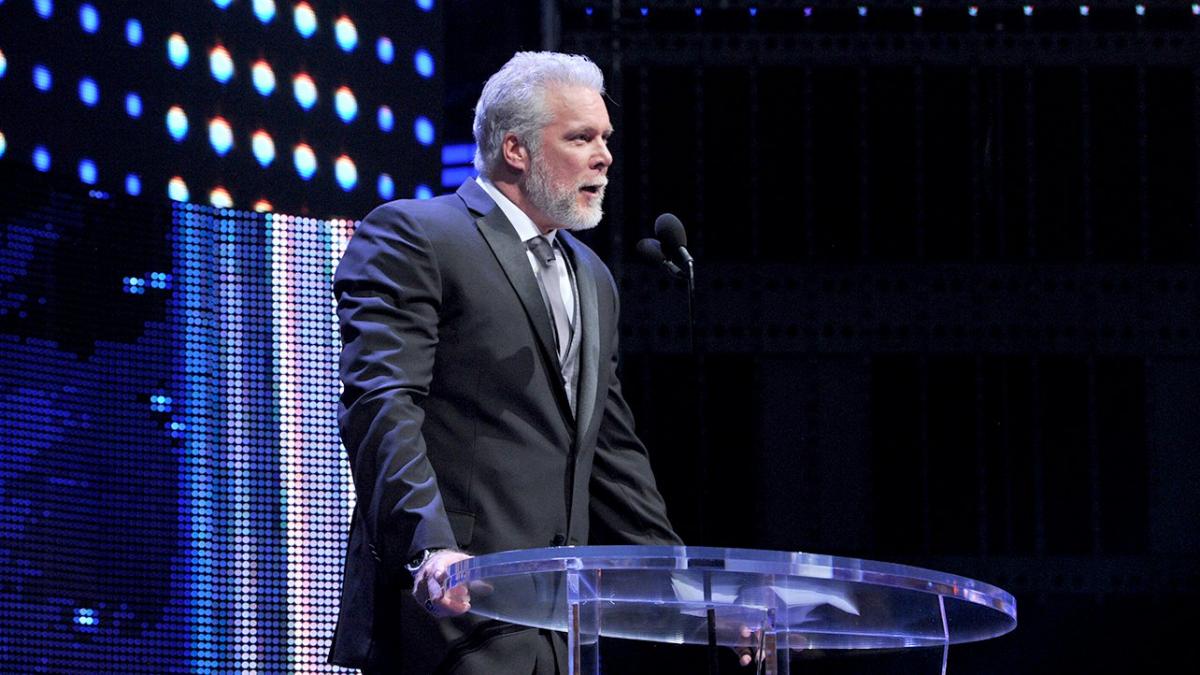
Kevin Nash wishes WWE wrestlers got a bigger piece of the financial pie, but it doesn’t sound like the Hall of Famer will be playing an active role in trying to make that happen.
After the company’s post-WrestleMania 42 roster cuts, Nash called for WWE wrestlers to become union members by joining SAG-AFTRA, a labor organization that represents those who work in the film/television industry. His call was supported by political figure Andrew Yang, who said WWE talent should already be in SAG-AFTRA given that they participate in some of the most-watched scripted entertainment that airs each week.
The topic came up again on the latest episode of Nash’s Kliq This podcast. Nash mentioned that, through their collective bargaining agreement, NBA players receive roughly 50 percent of the revenue the league generates. With no CBA, WWE talent receive a much less favorable revenue split (15 percent as of 2022). Nash hopes that changes and did start to dive into the SAG-AFTRA issue but is not involved at the moment.
“I just wish that the WWE guys were getting a bigger percentage of what was being brought in than they are,” Nash said. “I’d like for it to be an open door, to sit down — and it’ll never get there. Because, you know, I made some inroads with SAG and it’s just…”
Nash brought up that, when you’re a SAG member, you have to pay a percentage of your earnings toward union dues. He still pays $800-900 quarterly from his film residuals.
“I wanted to get involved, and it was one of those things where just like, as I started to dive into it, I sent a message to Andrew [Yang], and he got back to me, but I didn’t get back to him because it was just like, what benefit does this do to me?” Nash said. “I’m done [wrestling]…”
Nash feels unionization would have been more beneficial to his generation than it would be today. Now, the industry has grown and top wrestlers are making more money than they used to. Nash feels, when it comes to this or any other issue, it’s important to look at things from both sides.
“Everybody has their own coach. Like, they’re already so far above where we were. And it’s not jealousy or anything else, it’s just like, the industry has grown. And the top talents’ pay has grown substantially, tenfold [from] when I was there,” he said. “There wasn’t the Netflix money. There wasn’t the ESPN money. Like, they didn’t have — you just have to look at it from both sides. That’s the biggest problem we have on earth. And I’m learning that at 67 years old. That when it comes down to it, when you walk into a Target, 75 percent of the people in that Target, you could sit down and have dinner with and absolutely get along with. It’s the fringe 12.5 percent on each side that you can’t.”
Kevin Nash on his legacy in wrestling —
Last week on Kliq This, Nash mentioned that he thought his legacy in wrestling would be how he and Scott Hall helped normalize large guaranteed contracts. He expanded on that by saying the real difference they made was going into the WCW locker room and sharing how much they were making with the other top stars.
“It wasn’t the fact that we got the deals. It was the fact that we went into the WCW locker room and made our deals well-known to every top guy in that locker room. That’s the difference,” Nash said. “People have always gotten paid, but nobody knew what Hogan got. They could always suspect. We went to the guys and I would just say, ‘Dude, how much you making? [They reply] I’m making 800. I’m making this. You need a f***ing raise. We’re working in the same f***ing matches.'”


Joseph Currier is the lead editor of F4WOnline.com, directing daily news coverage and writing articles on professional wrestling. He is a graduate of the University of Massachusetts, obtaining a journalism degree in 2016. Joseph joined F4W during his time at UMass and has now been writing about the industry for nearly a decade.
In addition to his work with F4W, Joseph has previously contributed to Sports Illustrated's wrestling coverage. He lives in Massachusetts and is a diehard fan of the Boston sports teams and Liverpool Football Club.